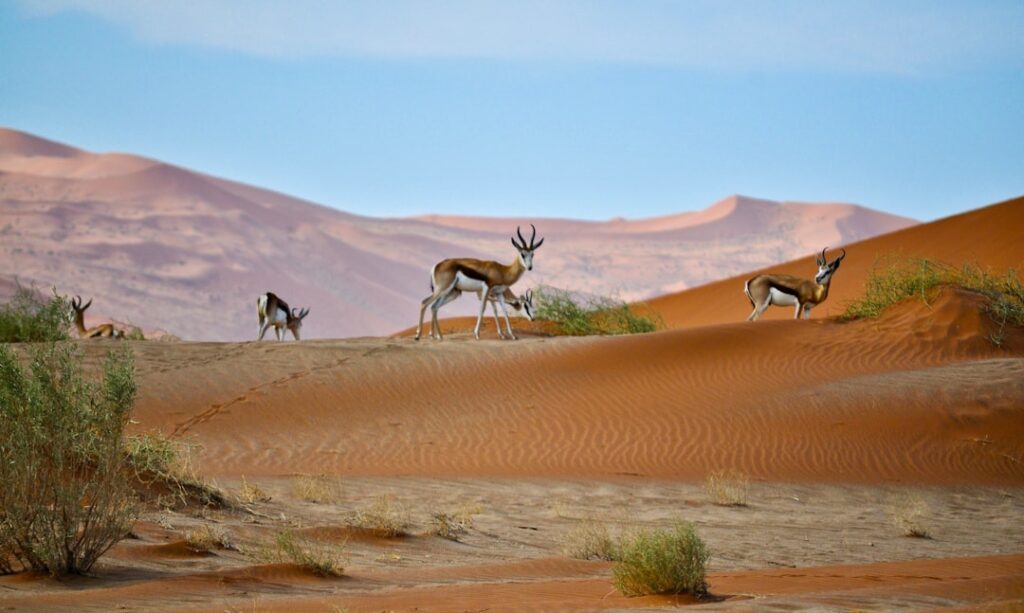
Imagine driving yourself through Namibia’s vast open spaces, where the endless dunes of the Namib Desert meet the horizon. The freedom of a self-drive trip is unmatched, but many travelers jump in without enough preparation. Without a clear plan, you risk missing iconic spots like Sossusvlei’s towering red dunes or the haunting Skeleton Coast. These sites require time and timing, so a loose schedule often leads to disappointment.
Distance is one of the biggest traps for self-drivers here. Namibia’s attractions are spread far apart, and gravel roads slow you down. For example, getting from Swakopmund to Etosha National Park can take up to eight hours. People often underestimate this and try to squeeze multiple stops into a day, which means less wildlife viewing and more time behind the wheel. Realistically, you should factor in fuel stops and rest breaks since gas stations can be scarce.
Picking the right vehicle matters more than most expect. A 4×4 is almost always necessary if you want to reach remote areas or venture onto sandy tracks. Some travelers rent standard cars thinking they’ll manage, only to find themselves stranded or damaging their rental. Check the condition of your tires daily and carry a spare, along with a jack and basic tools. Many roads also require careful driving at lower speeds to avoid punctures from sharp stones.
Booking lodgings ahead is a smart move, especially during busy months like July and August. Places such as Damaraland and Fish River Canyon fill up quickly. Last-minute options usually mean settling for less comfortable accommodations or locations far from your intended route. Early reservations let you choose from everything ranging from luxury lodges with hot showers to simple campsites where you can sleep under the stars.
Understanding local driving rules helps avoid fines and hassles. Speed limits vary widely between paved highways and gravel roads, sometimes dropping to 60 kilometers per hour on certain stretches. Some areas need special permits or restrict access during rainy seasons. Always carry your driver’s license, rental agreement, and insurance papers, as police checkpoints are common. It’s also worth having a physical map or offline GPS because mobile coverage is patchy.
Connecting with someone who knows Namibia well can add depth to your trip. A guide or travel planner can suggest hidden gems like lesser-known conservancies or authentic community visits that typical guidebooks miss. They can warn you about seasonal road closures and suggest realistic daily distances based on actual road conditions rather than just map measurements.
If your plans include traveling beyond Namibia, consider routes through Botswana or Zimbabwe. Driving from Etosha to Botswana’s Okavango Delta offers a remarkable change in scenery, from arid deserts to lush wetlands. Likewise, a detour to Victoria Falls in Zimbabwe provides a spectacular contrast to Namibia’s quiet vastness. Such extended trips require extra paperwork and border crossing research but reward you with diverse wildlife and cultures.
Self-driving in Namibia rewards those who prepare thoroughly, studying distances, choosing suitable vehicles, securing accommodations early, and understanding local regulations. For detailed advice tailored to your interests, visit self-drive Namibia. Planning well lets you focus on the stunning landscapes and wildlife instead of worrying about logistics.
Namibia’s heart beats with vibrant cultures and breathtaking nature for those ready to take the wheel and explore at their own pace. For practical assistance on planning your route or vehicle hire, check out travel support in namibia.