
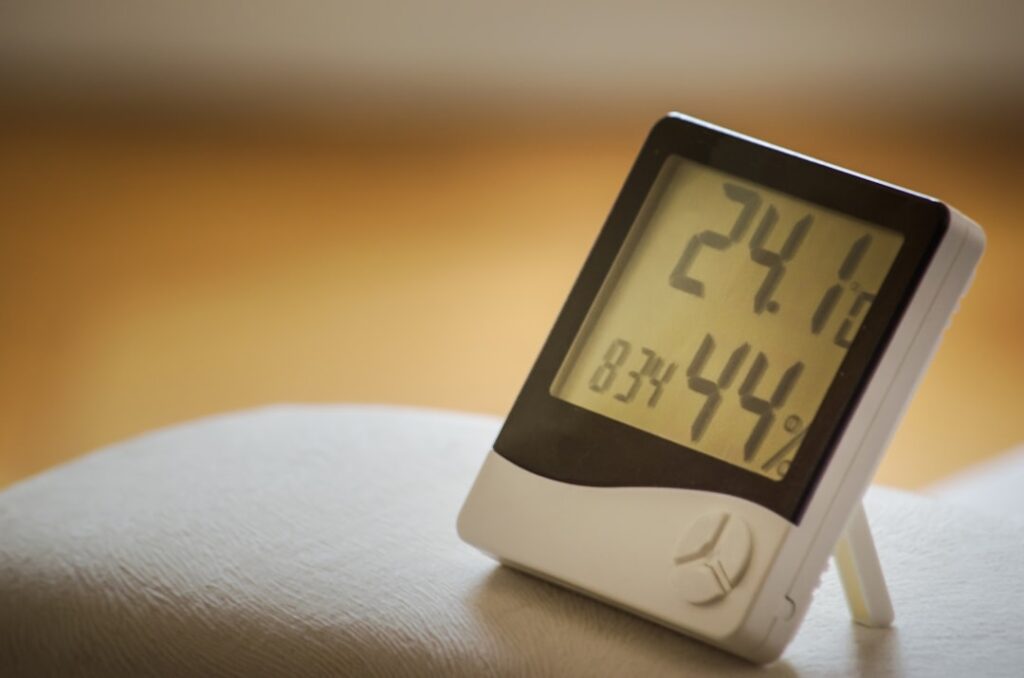
Step into a damp cellar or storage space, and you’ll likely notice the heavy, moist air right away. That’s when a hygrometer proves its worth by measuring humidity levels precisely. These instruments track moisture in the air, which helps you manage indoor climates effectively, whether it’s a home, a commercial facility, or a specialized storage area. Without accurate humidity data, you’re essentially guessing how to control the environment.
For business owners, humidity isn’t just uncomfortable, it can disrupt operations. Take wineries, for example. They depend on stable humidity to age wine properly. Too much moisture invites mold, ruining vintages and causing financial damage. Warehouses storing electronics face similar risks; too much moisture can corrode components and lead to costly failures. Knowing the exact humidity helps prevent these losses.
Hygrometers come in different styles. Analogue models usually have a simple dial and needle that shifts with humidity changes. Digital ones offer exact numbers on a screen and often include extra features like temperature readings or memory for logging data over time. These capabilities make digital devices handy for ongoing monitoring where precision matters. However, analogue versions are still favored in many settings for their simplicity and reliability.
Relative humidity is the key metric here, it shows the current moisture level as a percentage of what the air can hold at that temperature. This number tells you how close the environment is to saturation. When it approaches 100%, condensation happens, which can cause damage to materials and equipment. Monitoring relative humidity regularly helps avoid these problems before they escalate.
Keeping your hygrometer accurate means regular calibration. Devices can drift over time, especially if exposed to extreme heat or cold. It’s common for businesses to schedule annual professional calibrations or use salt test methods themselves to verify readings. Skipping this step can lead to faulty data and misguided climate adjustments.
Some advanced hygrometers integrate with building management or smart home systems. They can trigger heating, ventilation, or air conditioning units automatically based on live humidity data. This automation cuts down on manual checks and helps maintain stable conditions around the clock, which is particularly useful in large facilities or sensitive environments.
If you’re ready to buy a hygrometer, start with a reliable supplier offering a broad selection. A good range allows you to compare features like response time, accuracy range, and connectivity options. Check reviews or user manuals too; they often reveal quirks you won’t find in specs alone. For example, some digital models may need frequent battery changes or struggle with rapid humidity swings.
Customer service matters when picking an instrument. Having access to technical support or clear maintenance guides can save hours troubleshooting issues later. Many users find it helpful to keep a simple log of device readings alongside calibration dates, that habit prevents confusion when conditions change unexpectedly.
If controlling moisture is part of your plan, consider contacting providers offering climate control products and advice tailored across Australia at humidity monitoring in melbourne. Taking early action could protect your property and assets from the hidden costs of unchecked dampness.