
A common belief is that any heater will warm the air equally. In reality, electric infrared models mainly provide radiant heat, which travels directly from the heating element to people and nearby surfaces, much like sunshine. They can feel effective in a breezy area because warmth is not first dispersed through the whole space. Gas heaters generally create both radiant heat and convection, where warmed air rises and circulates. Comparing options for outdoor patio heating therefore starts with deciding whether direct warmth or broader air movement suits the setting.
Another myth says a higher wattage automatically means a better heater. Wattage describes electrical power consumption, not a guaranteed level of comfort. Placement, reflector design, ceiling height and wind exposure also affect the result. A 2,000-watt unit mounted above a sheltered dining table may feel more useful than a larger heater positioned at the edge of an exposed deck. Think of coverage as the area receiving useful warmth rather than the total area visible from the heater. Manufacturers’ coverage guidance is a sensible starting point, but the local layout still needs judgement.
Some homeowners avoid gas because they assume it is always inefficient, while others assume electric heating is automatically inexpensive. Neither view is reliable without considering the installation and usage pattern. Gas can suit a spacious, open area where portability matters, whereas electric heating can provide controlled warmth for a fixed seating position. Running cost depends on the energy tariff, fuel price, heater input and hours of operation. For example, warming two people at a small table may require less energy than trying to heat every seat around a large, uncovered entertaining area.
It is also mistaken to treat an outdoor heater like an indoor appliance. Weather exposure, ventilation and clearance from combustible materials all matter. A covered patio may protect equipment from rain, but it can also restrict airflow if the roof and walls are poorly suited to the appliance. Electric units need an appropriate outdoor-rated connection, and gas equipment needs safe ventilation and careful cylinder placement. The relevant IP rating is a code describing resistance to dust and water; it is not a promise that a product can withstand every storm. Always follow the installation instructions and have fixed connections assessed by a qualified professional.
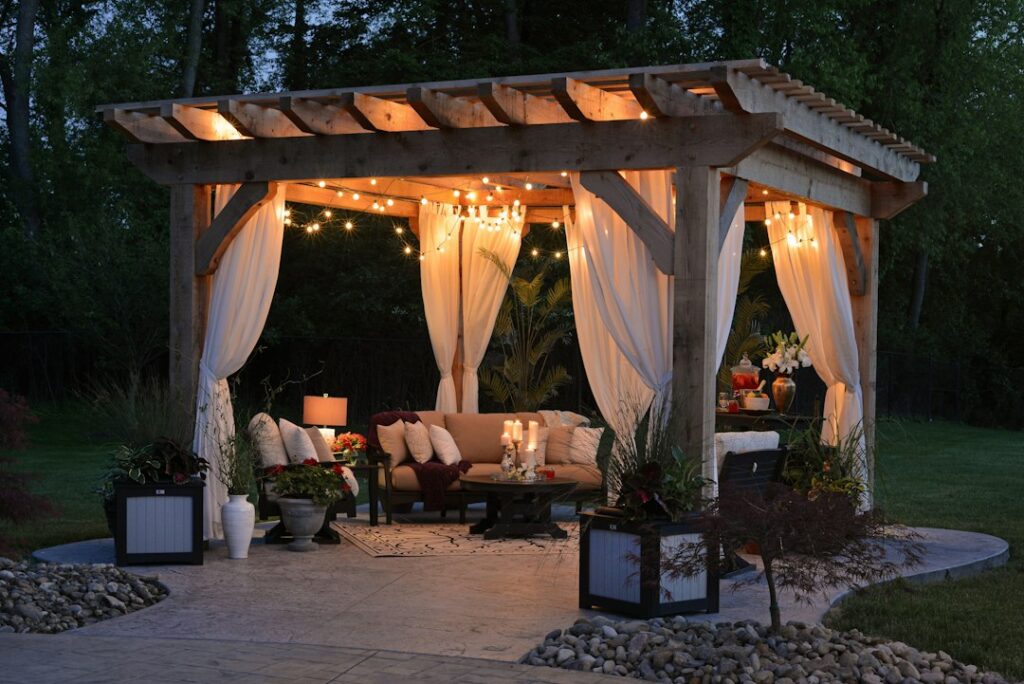
A thermostat is often described as a cure for every comfort problem, yet it only controls temperature where its sensor can detect conditions. Outdoor airflow changes quickly, so a sensor near a warm wall may read differently from the air around guests. Wind direction can also carry heat away before it reaches a chair. Simple choices, such as positioning seating within the heater’s intended zone, adding wind protection and switching the unit on shortly before people arrive, can matter as much as the control system. For a covered entertaining area, outdoor living ideas can help connect heating with seating and shelter decisions.
Finally, wood, gas and electric heating are not interchangeable lifestyle choices. Wood can create a focal point and suit people who enjoy tending a fire, but smoke, ash storage and local restrictions may affect its practicality. Gas offers flexible placement where the appliance permits it, while electric models can be convenient for defined zones and quick control. The most sensible choice reflects how often the patio is used, whether meals are prepared nearby, how much maintenance is acceptable and how exposed the area is. A realistic plan improves comfort more reliably than choosing the largest or most conspicuous heater.