
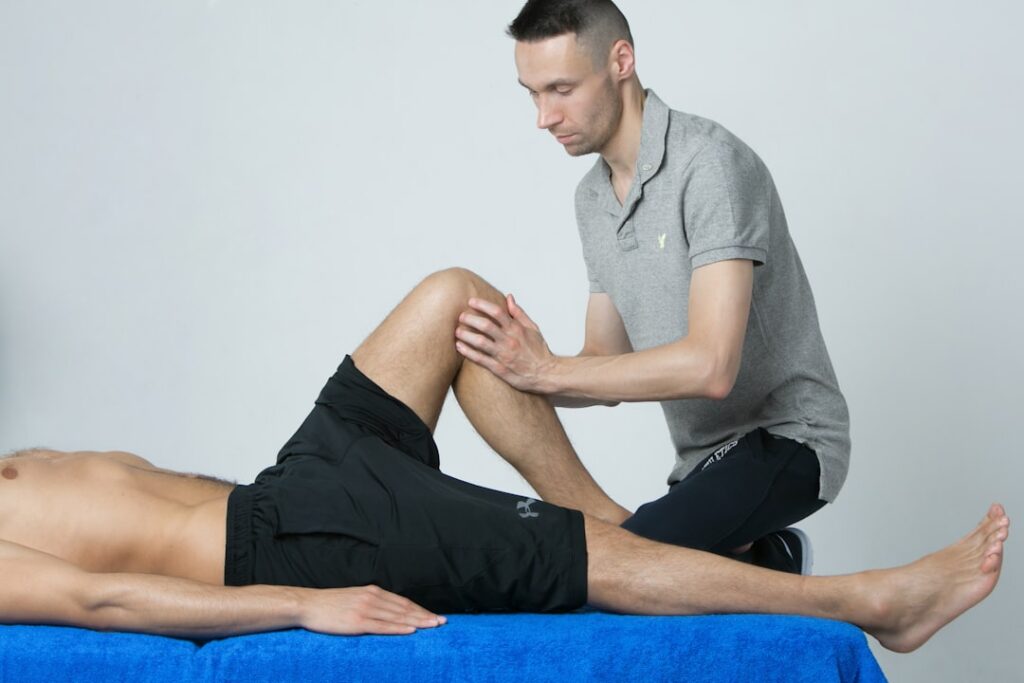

Joint hypermobility and joint instability are related but different terms. Hypermobility describes a larger range of movement; instability suggests unwanted movement, reduced control, or a joint that repeatedly gives way. A person may have flexible elbows without having unstable elbows. During an appointment, the physiotherapist may observe walking, squatting, reaching, balance, and single-leg control. They may also review an old scan, an injury history, or a symptom diary if one is available. Those details prevent the plan from being based on flexibility alone. For tailored hypermobility physio, an individual assessment is a sensible starting point.
Stretching is not automatically useful for a hypermobile joint. If a knee, shoulder, or ankle already reaches a broad range, repeatedly pushing farther may irritate the surrounding tissues without improving control. Treatment may instead address proprioception, the body’s awareness of joint position, through slow and precise movement. A person whose knee moves inward on stairs might practise a smaller, steadier step while watching alignment in a mirror. The purpose is not to restrict normal movement or make a joint rigid. It is to improve awareness, timing, and confidence during tasks that currently provoke symptoms.
Strength work can be appropriate even when joints feel loose. The starting point may be an isometric exercise, where the muscle contracts without obvious joint movement, followed by controlled resistance through a comfortable range. For an irritable shoulder, that could mean a gentle hold against a wall before progressing to a light lifting task. For an ankle, seated calf work may come before repeated heel raises while standing. The load should be increased gradually, with attention to pain during exercise and later that day. A written exercise record can help identify whether a flare followed a new movement, a longer session, or too little recovery.
Load management is often more useful than complete rest. Someone may feel capable of a long walk on a good day, then spend the next two days managing pain because the increase was too large. A steadier plan might retain short walks, divide household jobs into smaller blocks, and schedule recovery after demanding activity. The same principle applies to sport. A runner with recurring ankle pain may temporarily reduce distance or hills, then work on calf strength, foot control, balance, and landing mechanics before adding running volume. Footwear, running surfaces, sleep, and recent changes in training are also worth checking.
A practical reassessment looks at function rather than range alone. The physiotherapist may record how many controlled heel raises are possible, whether a person can balance while putting on a shoe, or how far they can walk before symptoms change their stride. These observations provide useful markers between appointments. They also expose a common misunderstanding: an exercise does not need to create a strong stretch or intense soreness to be effective. For some people, the early goal is simply completing a movement with less bracing, fewer corrections, or better control of the final part of the range.
Widespread aches need careful consideration, particularly in teenagers and people who also report fatigue, headaches, poor sleep, repeated sprains, or difficulty recovering after sport. Flexibility by itself does not establish a hypermobility-related disorder. A clinician may ask how symptoms affect school, work, sitting tolerance, recreation, and sleep, then discuss whether a GP or another health professional should be involved. Persistent pain can also make the nervous system more responsive to ordinary signals, so education, pacing, suitable exercise, and realistic activity goals may be used together. A physiotherapy care plan for hypermobility should reflect those wider circumstances.
The programme should change as control and tolerance improve. Progress might mean fewer ankle rolls, a steadier shoulder during reaching, less interruption to sleep, or a safe return to work and sport, rather than gaining more flexibility. Keep notes on exercise dosage, symptoms later that day, and the next morning; that small habit makes adjustments clearer and avoids repeating a session that caused a setback. Seek prompt medical advice for a hot or markedly swollen joint, significant trauma, unexplained weakness, numbness, severe pain, or a sudden loss of function. Worsening symptoms or repeated giving way also deserve reassessment instead of being dismissed as normal hypermobility.