
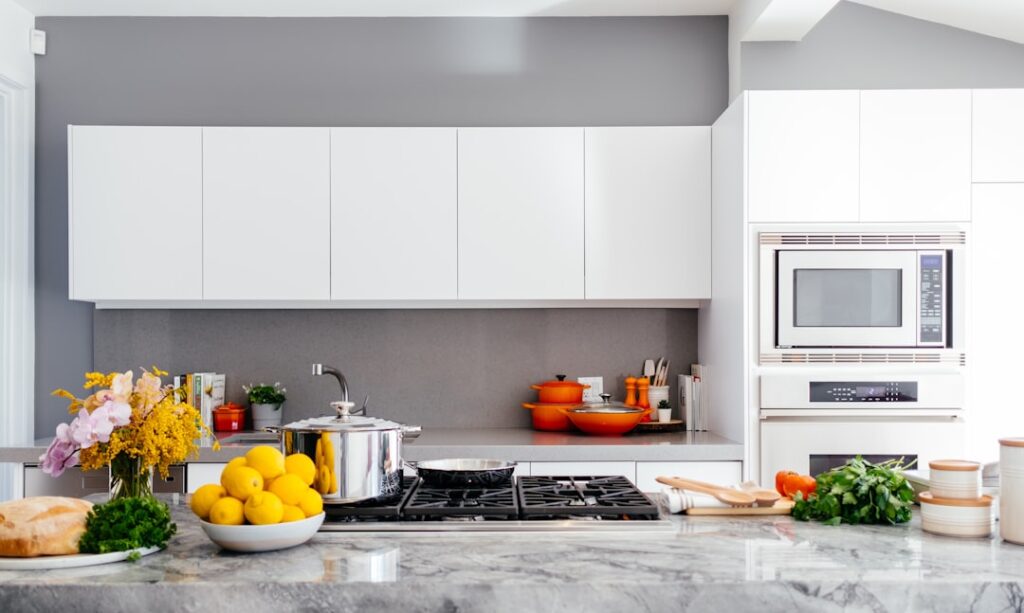

The new doors and drawer fronts you select will define the kitchen’s character. You can go with smooth, high-gloss finishes for a clean, modern vibe or pick warm wood grain textures for a timeless feel. Matte or satin paints work well if you want subtlety, while bold colors add personality. Choosing the right materials is about matching your lifestyle too; some surfaces resist fingerprints better, which matters in busy households.
Updating the hardware is often overlooked but can make a huge difference. Swapping out old knobs and pulls for options in brushed nickel, matte black, or oil-rubbed bronze can elevate your cabinets instantly. Pay attention to hinge quality as well, good hinges prevent doors from sagging over time. Small details like soft-close mechanisms improve everyday use and reduce noise.
Cabinet refacing generally involves removing all visible parts like doors and drawer fronts, sanding and prepping surfaces, then installing new components. The original cabinet framework stays put, which saves time and reduces waste. Professionals usually prime the cabinet frames to ensure paint or veneer adheres properly. Skipping this step can lead to peeling or uneven finishes later on.
You’ll want to assess your cabinets carefully before deciding if refacing makes sense. Look for water damage, warped frames, or structural issues that refacing can’t fix. If you spot any signs of these problems, replacement might be necessary. Otherwise, refacing can extend the life of your kitchen without disturbing plumbing or appliances.
The process itself typically takes several days depending on kitchen size and complexity. Installers will cover countertops and floors to prevent dust or scratches. They remove doors one by one, prep surfaces with sanding and priming, then apply paint or veneer. New hardware goes on last. It’s common for installers to leave a checklist for homeowners to confirm everything functions correctly before signing off.
When considering cabinet updates, it helps to understand the differences between staining, refinishing, refacing, and replacing cabinets. Staining and refinishing work best if your cabinets are solid wood with minimal damage and you want to restore their original appearance. Refacing replaces only the visible parts and changes the style more dramatically without full demolition. Replacement is the most expensive option but necessary when cabinets are structurally compromised.
Seeing before-and-after photos from local projects can be eye-opening. Homeowners often share how changing hardware alone improved their kitchen’s feel or how a new door style transformed an outdated space into something inviting. These examples offer realistic expectations about cost, timing, and disruption. A common misunderstanding is underestimating prep work, many think it’s just about swapping doors, but sanding and priming are critical for a lasting finish.
If you’re weighing options or unsure whether your cabinets qualify for refacing, reaching out for tailored advice can save headaches later. A free quote usually includes an assessment of your cabinets’ condition and recommendations on materials and styles that suit your budget and use patterns. Take a look at for more information. When you’re ready, start your project with kitchen refinishing to give your space a fresh identity.